Where it started
For the child who keeps asking.
It began with a child who never ran out of questions. Why does the digger dig? Where does the moon go in the morning? We wanted to answer the way a good book does — with a picture to look at and a voice telling the story — and to keep answering, as the questions kept changing. Tinku is what grew out of that.
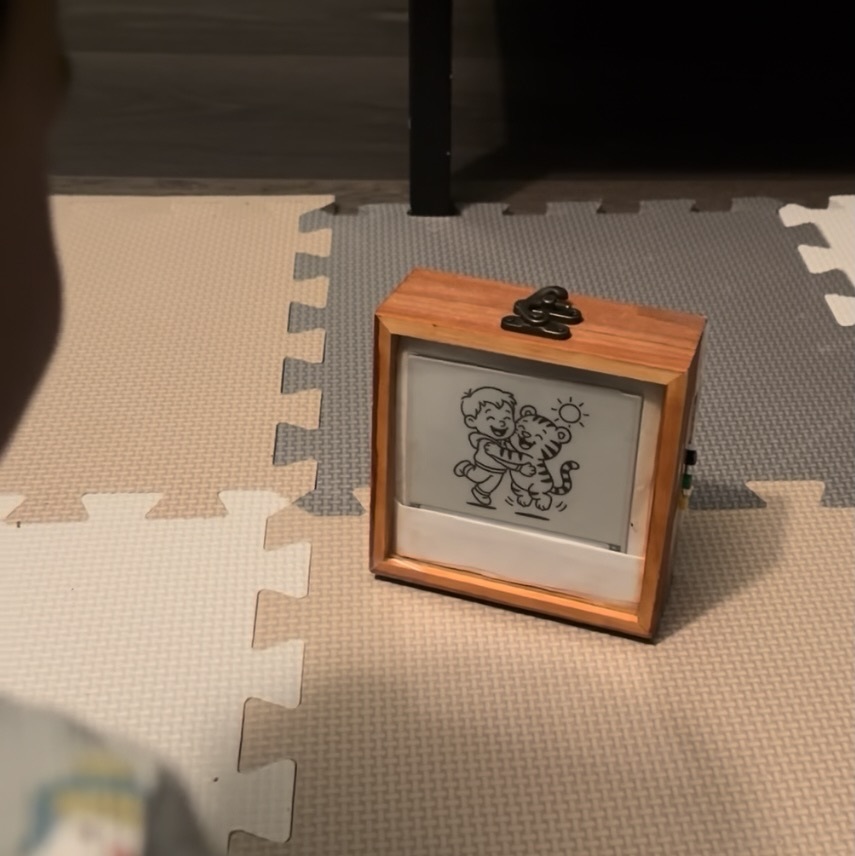 Before it was a product, it was a birthday gift for one curious kid — a little box we built by hand so the questions always had an answer.
The first attempt
The day the idea stopped being an idea.
Answering a child sounds simple until you try to build it. The hard part was holding a picture and the right voice together, at the exact moment a child is looking. The first version that managed it was just a bare circuit — a loose display wired to a board, with a battery taped on. But when a letter appeared on that little screen and the page turned, it stopped being an idea. It was real.
Giving it a body
Earning a body a child would reach for.
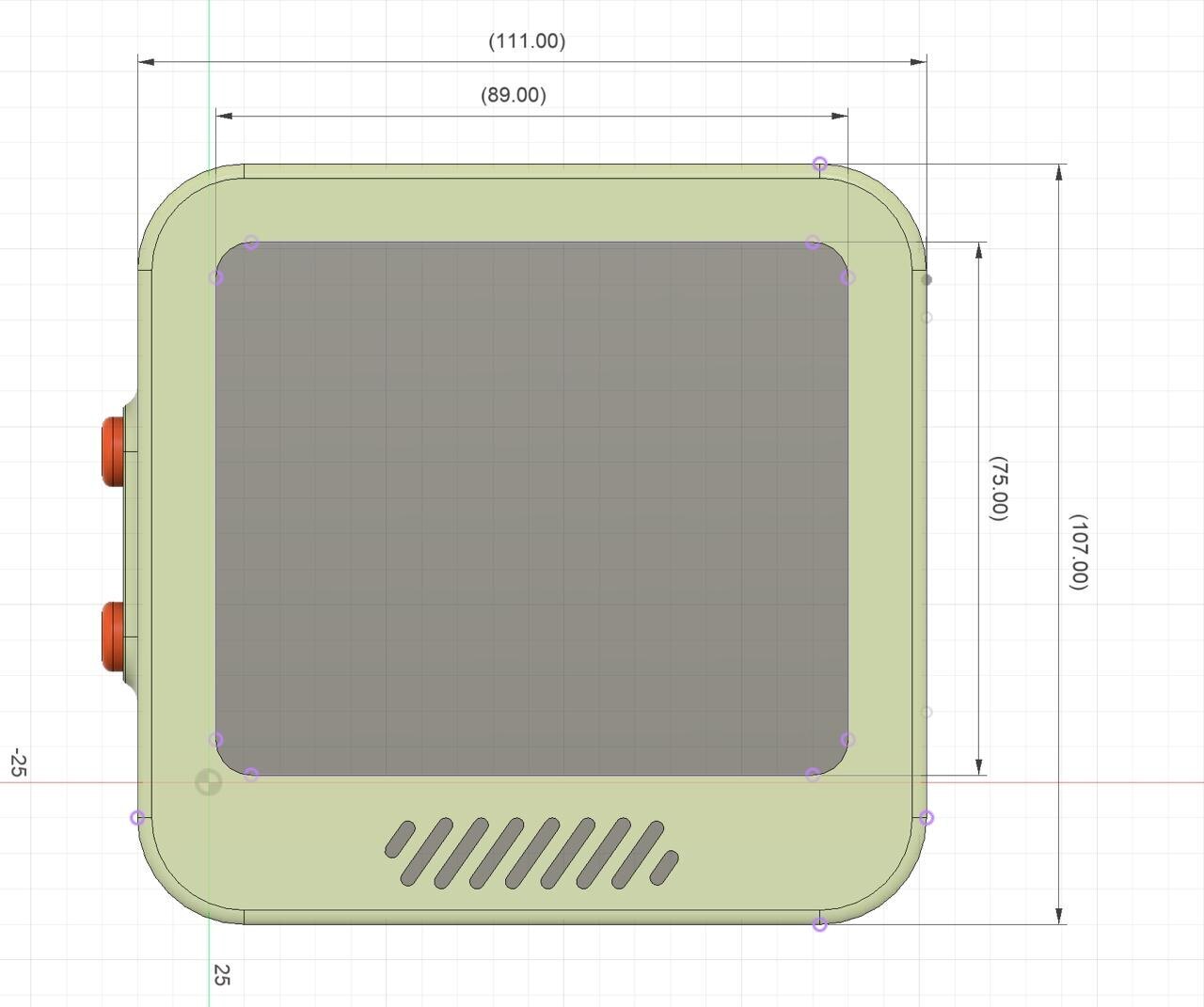
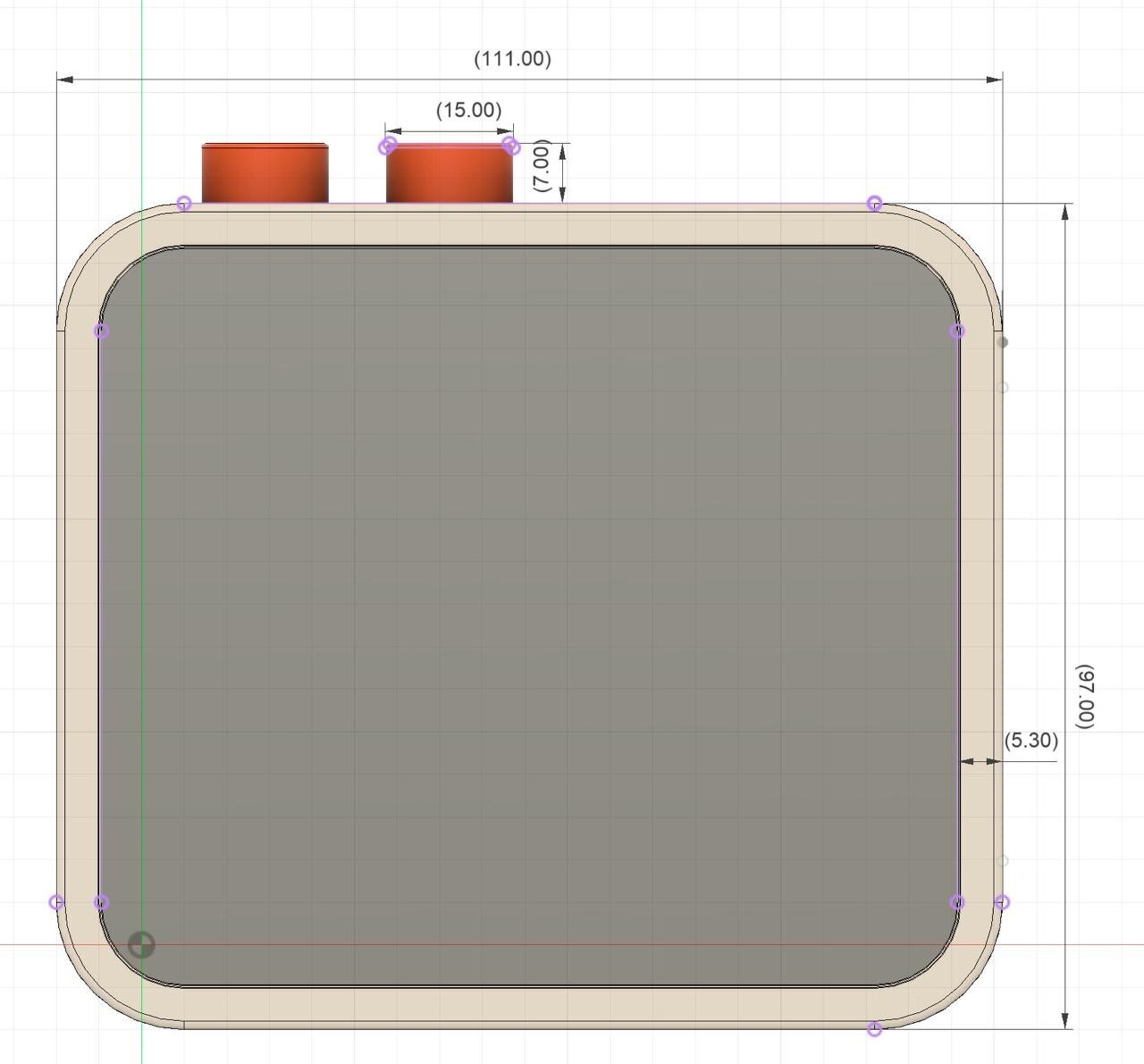
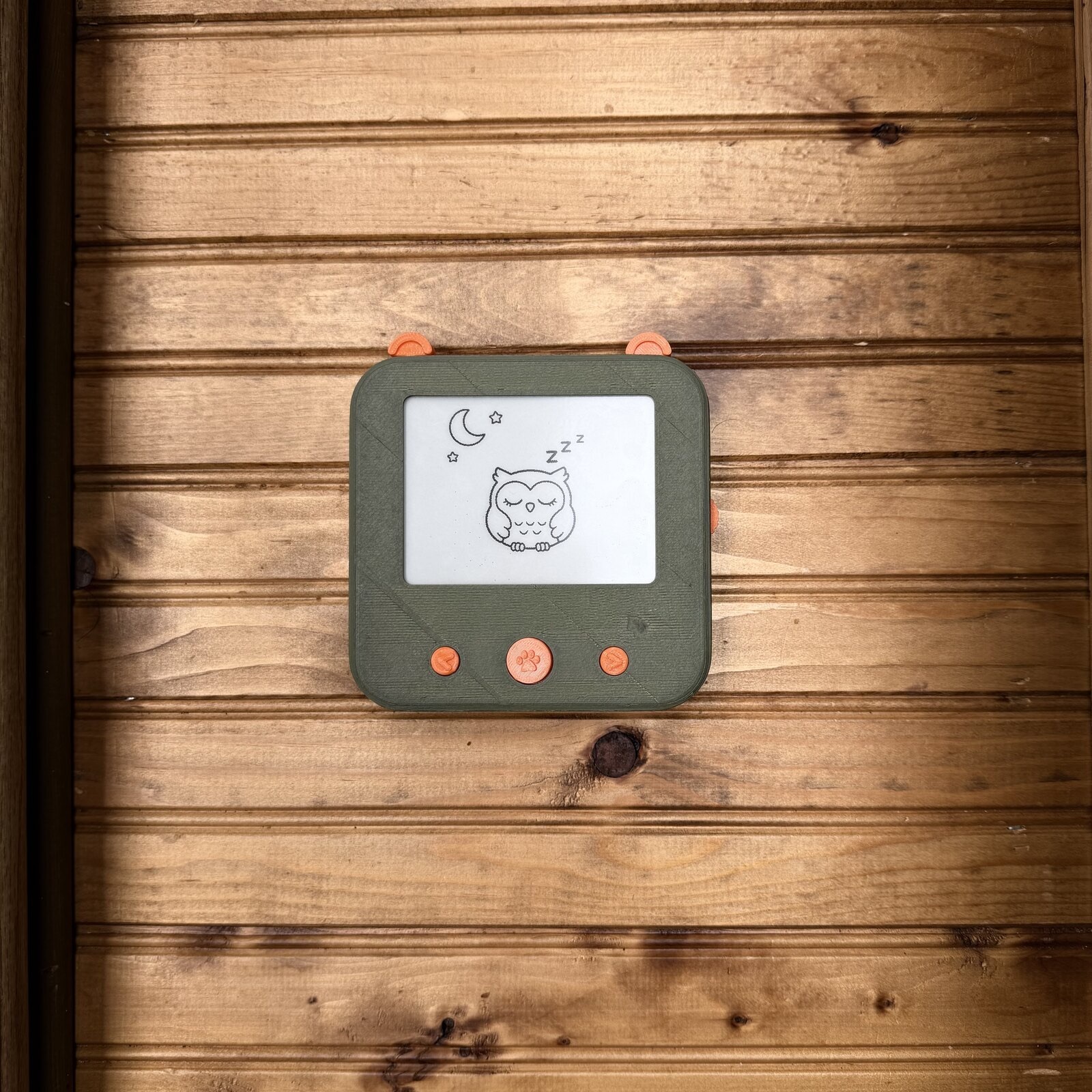
A thing that works in your hands still has to earn a place in a child's. So the wooden box gave way to a printed shell — sturdier, screwed together, with real buttons a child could press to turn a page or go back to a favorite without asking anyone. From there it was a long string of small decisions: where the buttons go, what the case feels like, and — since it's meant for kids — what might make them smile.
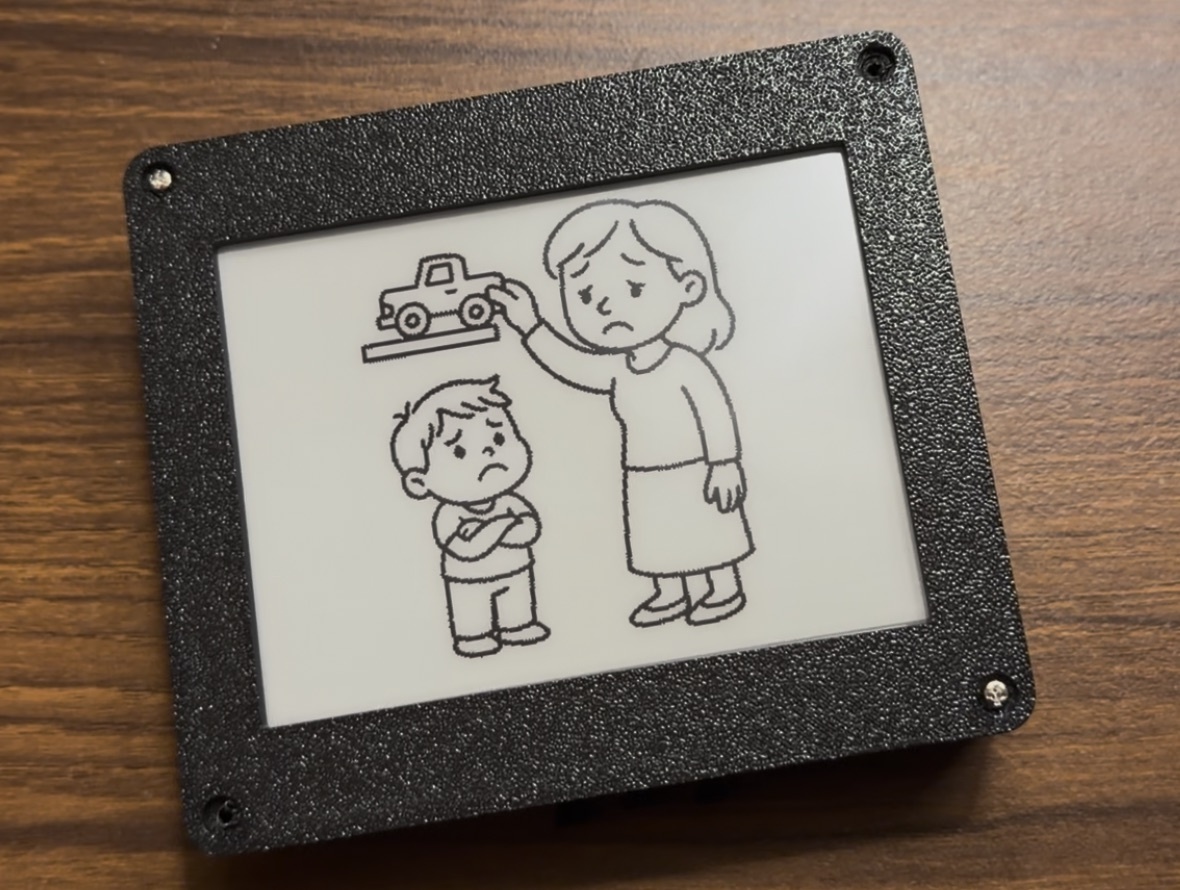
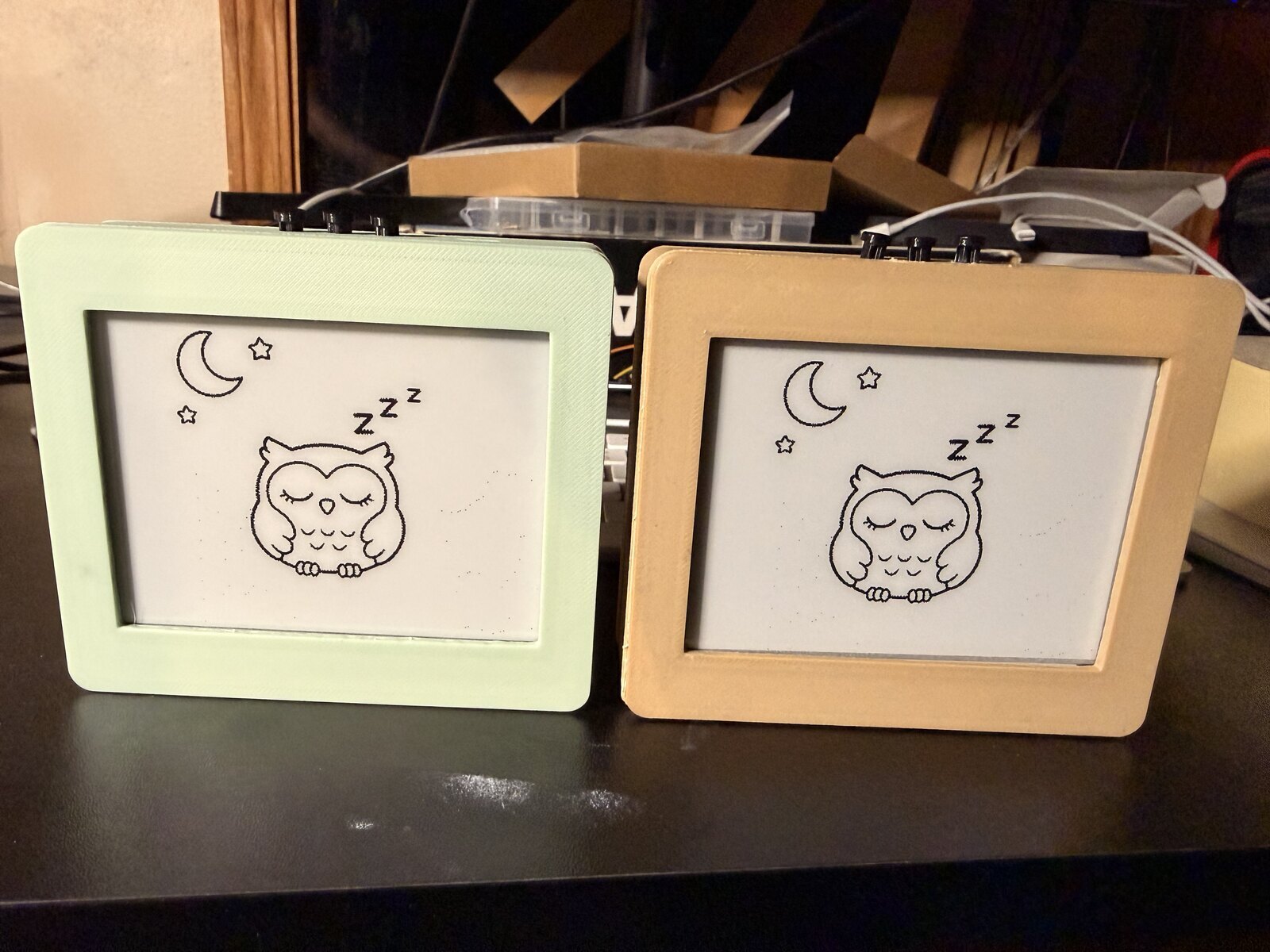
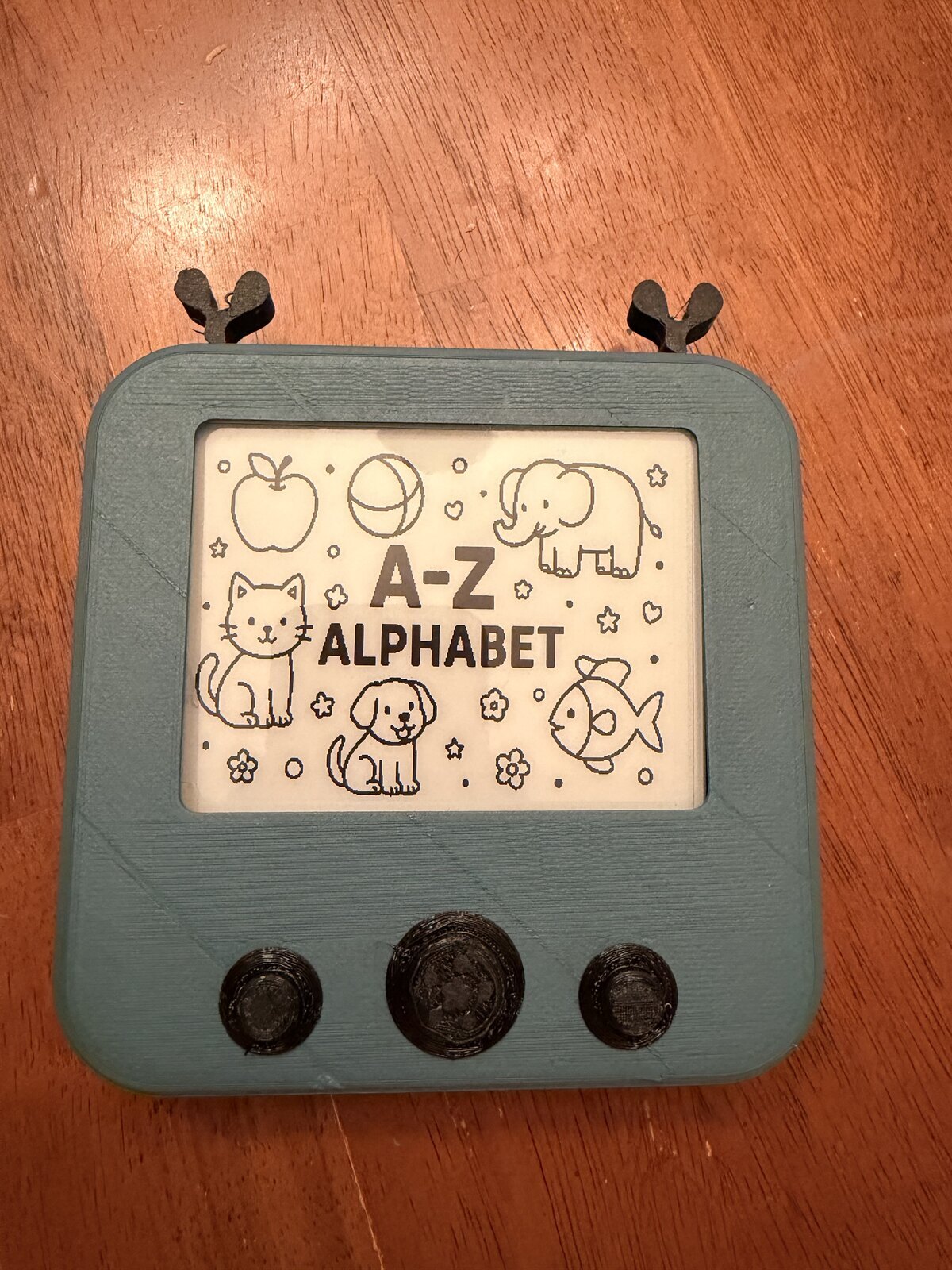
A peek inside the prototype notebook
Filling it with stories
The part that was never about the hardware.
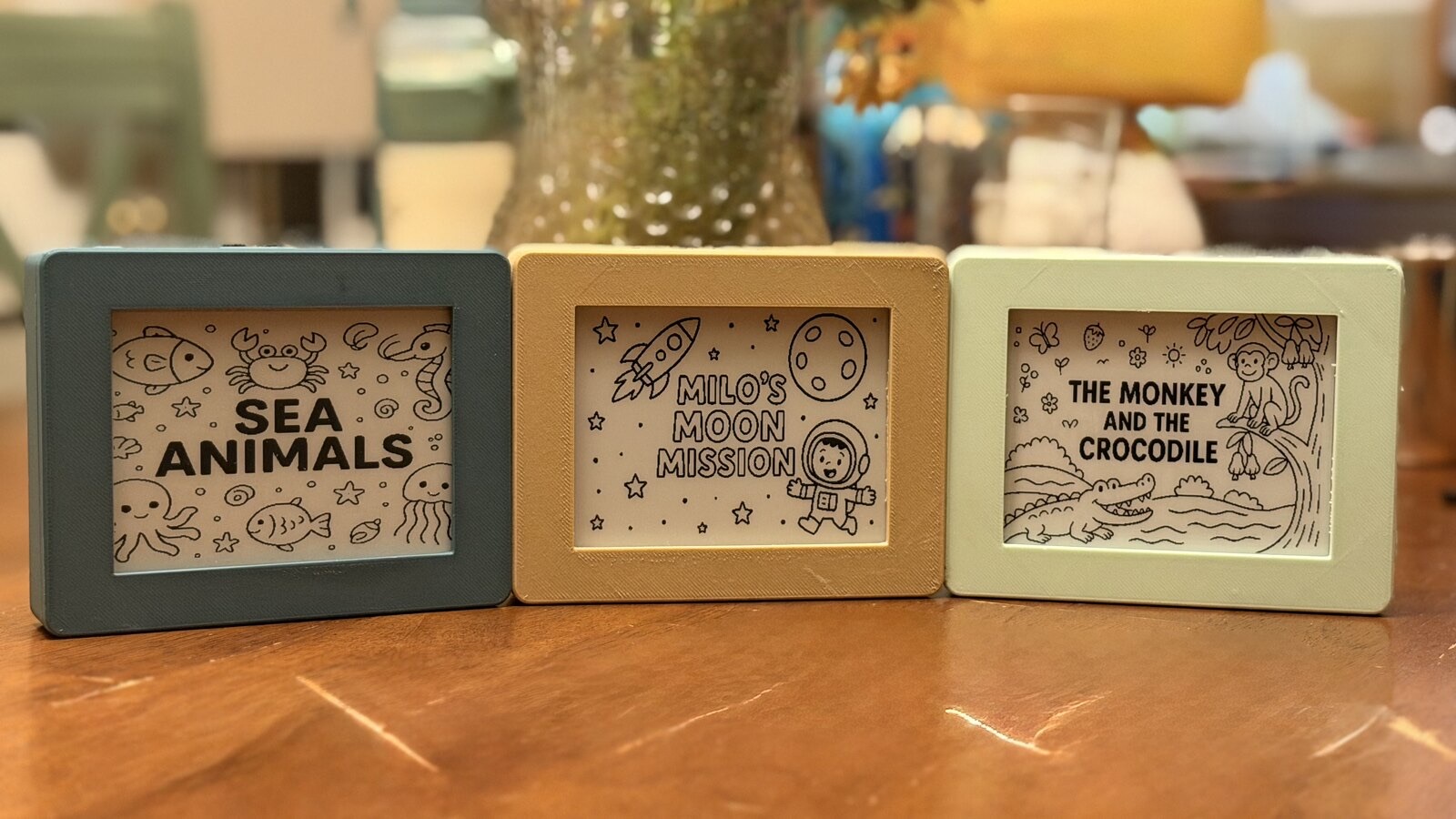
All of it — the wires, the cases, the buttons — was only ever in service of this: a child, holding a book they couldn't put down. A kid obsessed with musical instruments should have a book about musical instruments — the kind you can never find on a shelf. So we made that possible. The stories come from what a child actually reaches for, not from what someone decided every child should like.
Because every child's "favorite" is different, Tinku isn't a fixed shelf. New books can be made as a child's interests change, including bilingual ones so a story can be enjoyed in more than one language. And once a book is loaded, it plays without an internet connection — so it works at bedtime, in the car, anywhere.
Where we are now
What would you make for your child?
We're committed to making learning fun — and we're always listening and improving. If there's something you'd love to make for your child, tell us. We'd genuinely like to hear it.
You can reach us at hello@playtinku.com.
Follow along